Beyond Catalogue Motors

Why iNetic Custom Winding Topology is Essential for Humanoid Actuators?

The race to create viable, functional humanoid robots is pushing engineering to its absolute limits. From bipedal locomotion to fine-motor hand manipulation, every joint – every actuator – presents an extreme challenge. The core problem? These actuators must deliver immense torque and precise control in a package that is simultaneously lightweight and incredibly efficient to maximize battery life.

This is where the standard “catalogue motor” approach fails.

Off-the-shelf motors are products of compromise, designed to serve the broadest possible market. They are rarely, if ever, optimized for the unique, high-performance-density demands of a robotic joint. Engineers who try to design around a standard motor are forced to accept compromises in weight, size, or efficiency, which cascade into larger batteries, heavier limbs, and poorer overall performance.

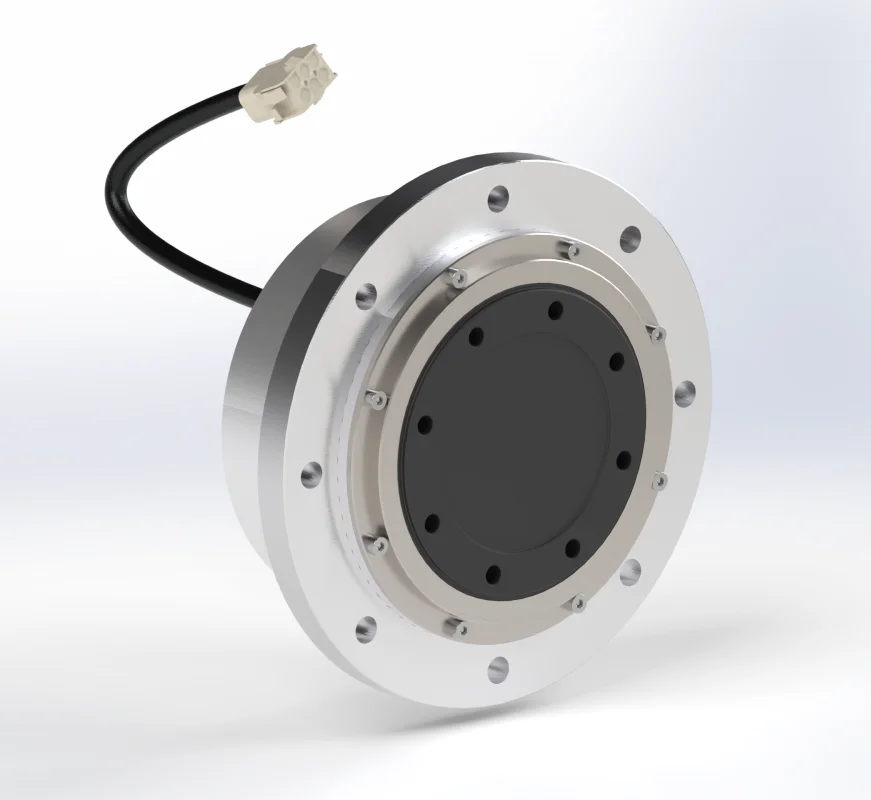
At iNetic, we believe this approach is fundamentally backward. Instead of forcing your design to fit a motor, we design the motor’s core “personality” to fit exact requirements for the arm, finger or leg actuator.

The Winding

A Motor's DNA

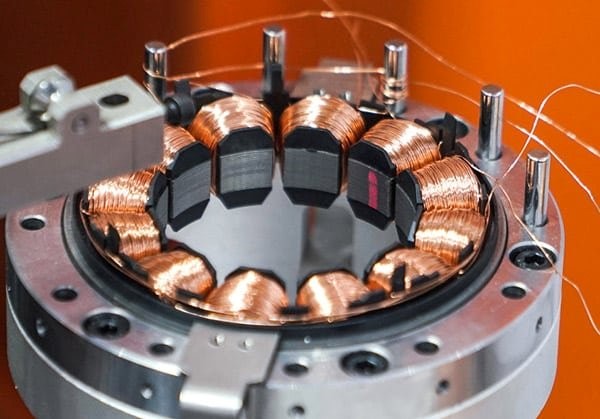
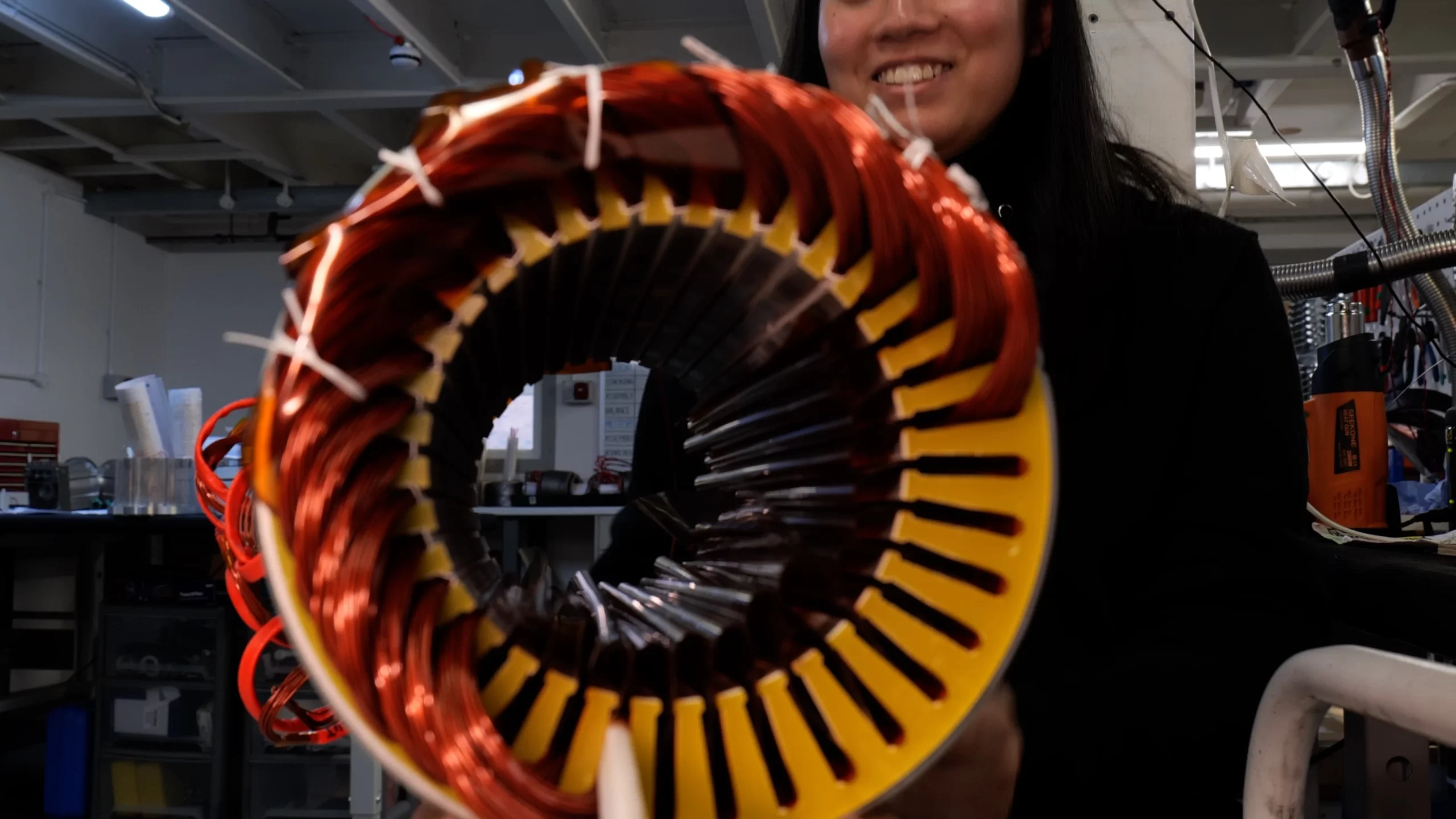
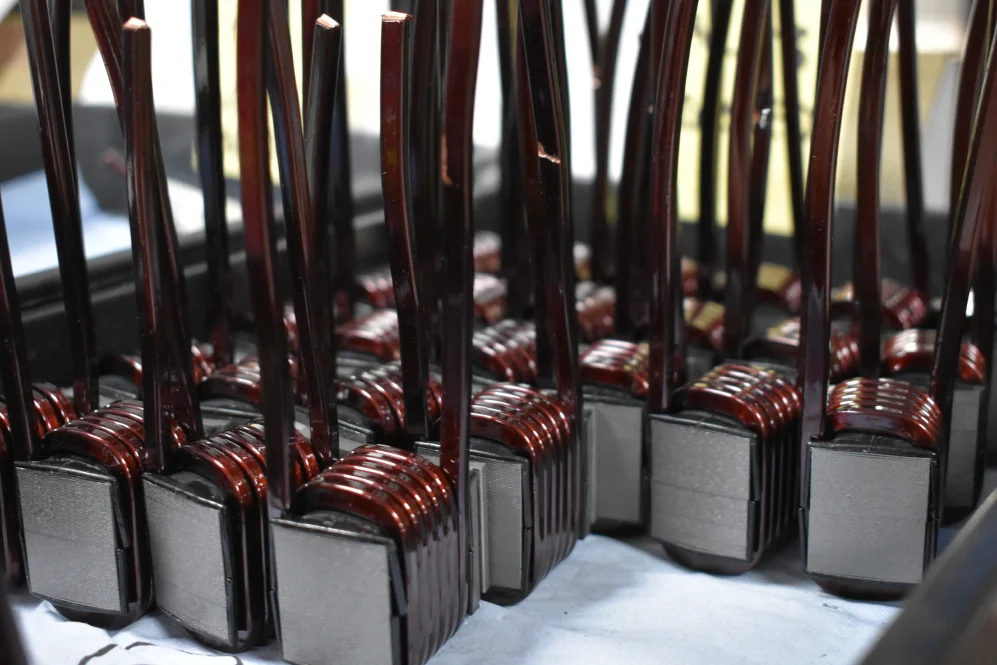
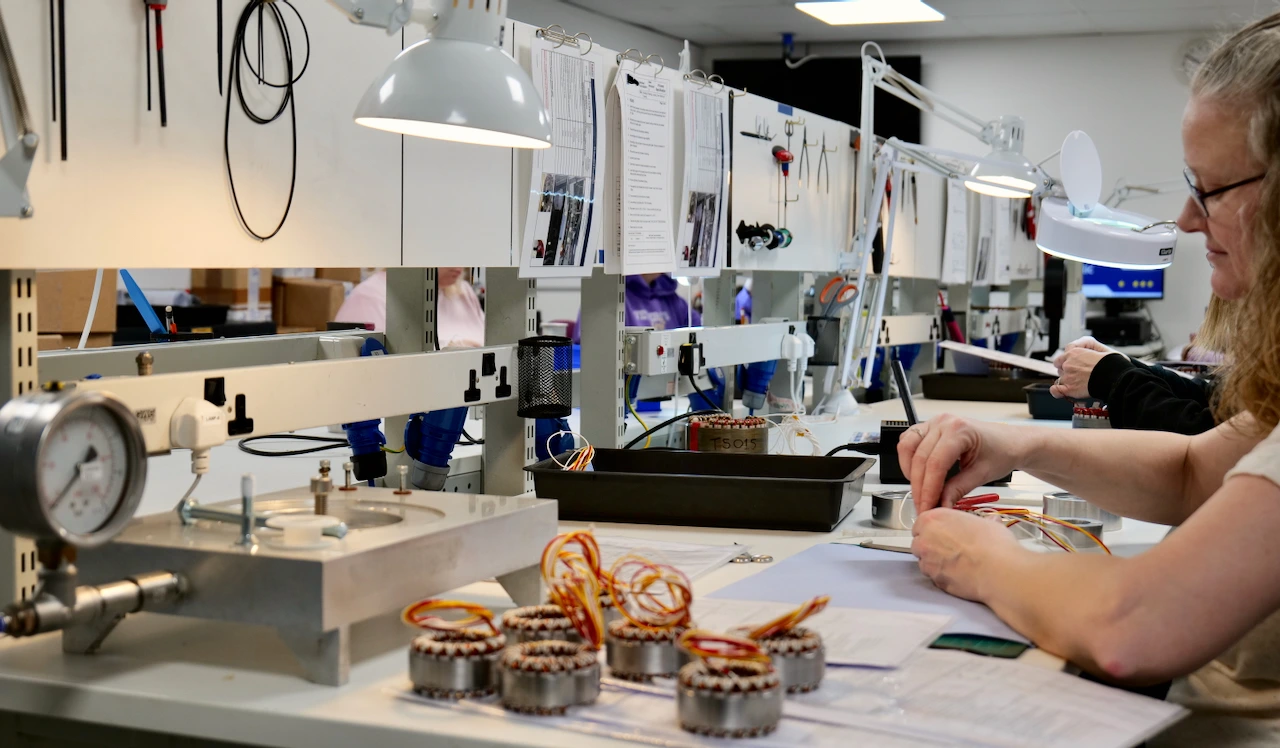
Think of a motor’s stator and rotor – its iron and magnets – as the “hardware.” The winding, the intricate pattern of copper coils placed within the stator, is the “software” that defines how that hardware behaves.

A simple change in the wire diameter or the number of turns per coil can completely transform a motor’s performance curve.

This relationship is defined by key motor constants:

  • Torque Constant (Kt): How much torque is produced per amp of current.
  • Speed Constant (Kv): How fast the motor will spin per volt (unloaded).
  • Terminal Resistance (R): The electrical resistance of the windings.

These factors are all interconnected. For example, using thinner wire with more turns results in:

  • Higher Kt: More torque for a given current.
  • Lower Kv: A lower top speed for a given voltage.
  • Higher Resistance: More heat generated for a given current ( I2R losses).

Conversely, using thicker wire with fewer turns results in:

  • Lower Kt: Less torque per amp (requiring more current for the same torque).
  • Higher Kv: A “faster” motor.
  • Lower Resistance: Higher current handling and potentially greater peak power.

A catalogue motor gives you one, fixed combination. iNetic’s custom winding design allows us to precisely tune this relationship. We can design for high-torque “grunt” in a hip actuator or high-speed, low-inertia performance in a wrist, all within the same or similar-sized motor package.

Matching the System

Batteries and Integrated Drives

A motor never works in isolation. It is part of a complex powertrain that includes a battery pack and a motor drive (controller). The winding is the critical interface that ensures these components work in harmony.

Modern humanoid robots are migrating to higher-voltage battery systems (e.g., 48V, 80V, or even 300V) to reduce current, minimize cabling weight, and improve system efficiency.

This is where a catalogue motor mismatch becomes catastrophic.

The iNetic solution is to design the winding topology by analysing the entire system. We ask:

  1. What is your battery’s nominal voltage? And the discharge rate profile?
  2. What are the peak and continuous current limits of your integrated drive?
  3. What is the exact torque-speed profile your actuator needs to perform its task?

With these inputs, we design a winding that delivers the exact performance curve required, ensuring it operates perfectly within the voltage and current envelopes of your chosen hardware.

The Ultimate Goal

Maximum Performance, Minimum Package

This system-level approach is how we deliver on the primary goal of humanoid robotics: maximum power-to-weight ratio.

By customizing the winding, we ensure that every gram of copper and iron is working at its peak potential for your specific application. We leverage advanced winding techniques and thermal modelling to maximize slot fill (packing in as much copper as possible) and manage heat.

Stop compromising your robot’s design to accommodate an off-the-shelf motor. The actuators are the “muscles” of your robot – they deserve to be custom-built for the task.

Talk to an Engineer

If you’re struggling to find a motor that meets your power, torque, and size requirements:

Contact the iNetic engineering team today