SAFETY FIRST

A Guide to Functional Safety in Modern Motion Control

In the world of high-performance robotics, automation, and advanced machinery, power and precision are paramount. But as our systems become more powerful, complex, and collaborative, another “P” becomes the most important of all: Protection.

Functional safety isn’t just about painting a guard rail yellow or adding an E-Stop button. It’s about intelligent, active systems that constantly monitor a machine’s state to prevent harm to people and equipment. These functions are built directly into modern motor drives-the “brains” that power advanced motors like ours.

Understanding this safety alphabet is critical for any engineer designing a modern, safety-critical system. Let’s break down the most common safety functions you’ll encounter.

Core Safety Functions

Stopping and Holding

These functions are the most fundamental, designed to bring a system to a safe state.

  • STO (Safe Torque Off):

This is the most essential, baseline safety function. When activated (often by an emergency stop button or a light curtain), STO safely cuts the torque-generating power from the drive to the motor1. The motor is no-longer “driven” and coasts to a stop based on its own friction and inertia2. This is a “Category 0” stop.

  • SS1 (Safe Stop 1):

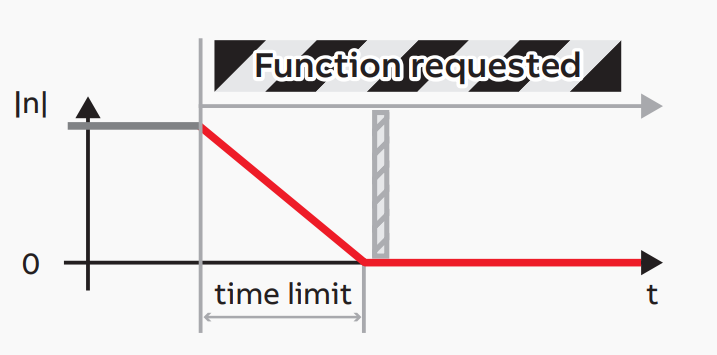
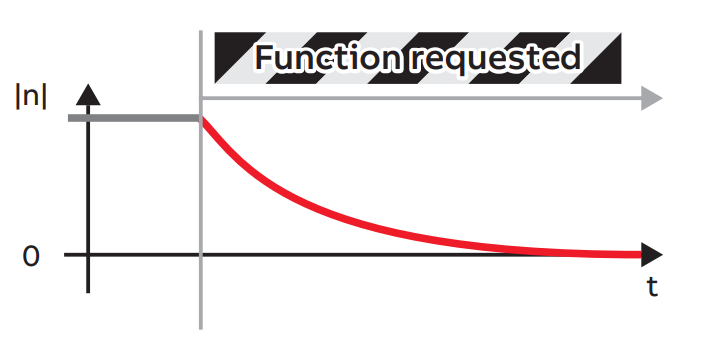
Sometimes, just coasting to a stop isn’t fast enough, especially with a high-inertia load (like a heavy robotic arm). SS1 is a “Category 1” stop that commands a monitored, controlled deceleration ramp to bring the motor to a standstill first, and then it activates STO to remove torque3. This brings the machine to a stop in a quick, predictable, and safe manner.

  • SBC (Safe Brake Control):

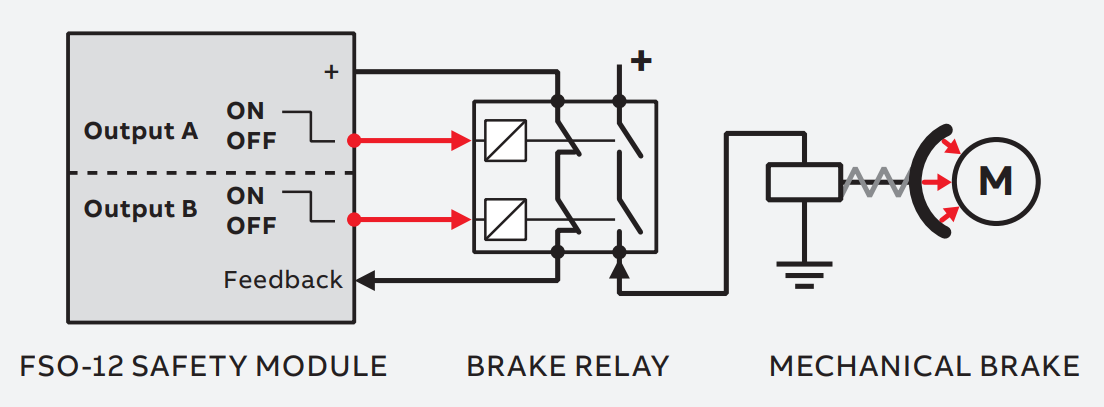
This function is crucial for vertical axes or any application holding a load against gravity. SBC provides a safe, reliable output signal to control a mechanical (friction) brake4. It ensures the brake is engaged before or as STO is activated, preventing a load from dropping when motor torque is removed.

  • SSE (Safe Stop Emergency):

This function defines how an emergency stop button behaves. It can be configured to trigger an instant STO (Category 0 coasting stop) or a controlled SS1 (Category 1 ramp-down stop), depending on the machine’s specific risk assessment6.

Advanced Functions

Monitoring Speed & Direction

These functions allow for more complex and collaborative safety scenarios, like safe-zone interaction.

  • SLS (Safely Limited Speed):

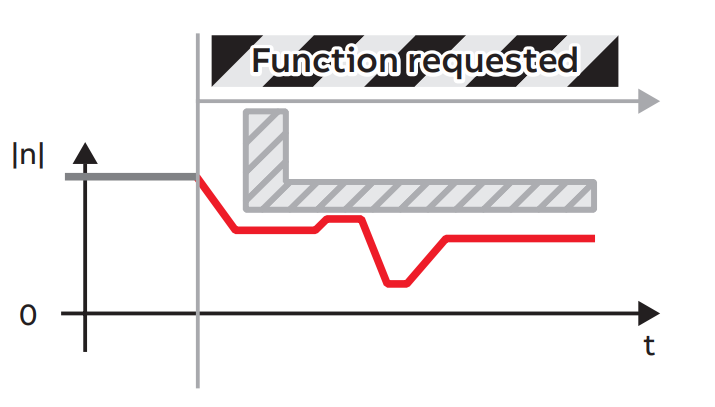
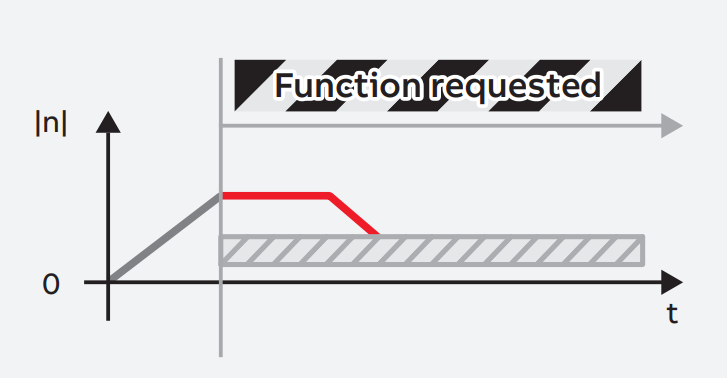
This is the “safe interaction” or “creep mode.” SLS allows a machine to operate, but guarantees that its speed will not exceed a specific, very low limit7. This is perfect for setup, inspection, or “teach modes,” allowing an operator to be near the moving machinery without risk of high-speed motion8.

  • SMS (Safe Maximum Speed):

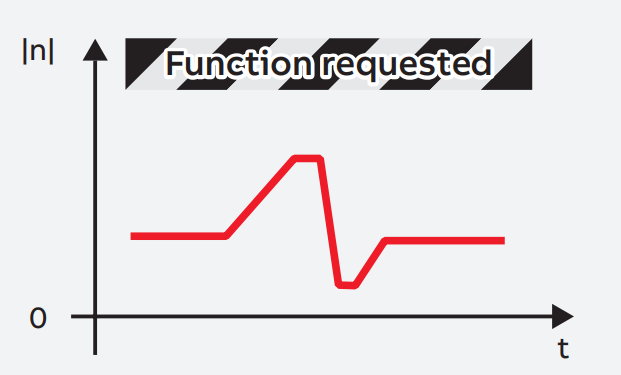
This is a hard “redline” for your motor. SMS constantly monitors the motor’s speed to ensure it never exceeds a pre-defined maximum operating limit9. This protects the motor and the machinery from catastrophic mechanical failure due to an over-speed condition.

  • SDI (Safe Direction):

Some machines, like conveyors or roll feeders, should only ever move in one direction. SDI is a safety function that ensures the motor is only allowed to rotate in the selected direction10. It prevents a fault from causing a dangerous and damaging reversal.

  • SSM (Safe Speed Monitor):

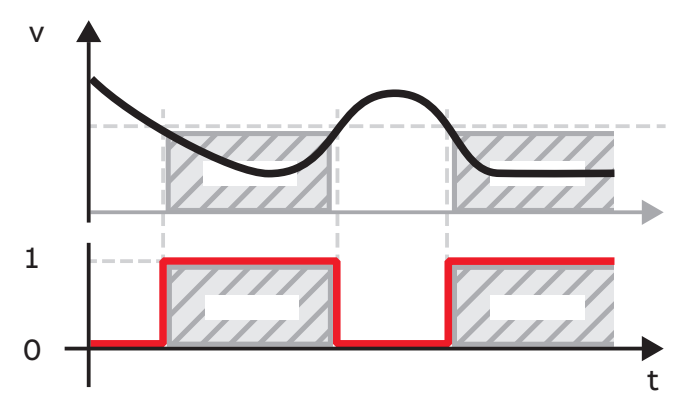
This is a “watchdog” function. SSM provides a safe output signal that confirms whether the motor’s speed is within a specific, user-defined range11. This signal can be used by the main safety PLC (Programmable Logic Controller) to, for example, unlock a guard door only when it has safe confirmation that the machine is at or near a complete stop.

Why This Matters for Your Motor

At iNetic, we design and build the “muscle” – the high-performance frameless motors and actuators at the heart of your system. But that muscle is only as safe and effective as the “brain” that controls it.

Understanding this safety architecture is a core part of our design process. We ensure our motor characteristics (like inertia, resistance, and thermal properties) are perfectly matched to your drive and its safety parameters.

Building a safety-critical motion system? Contact our engineering team. Let’s discuss how our motor solutions integrate seamlessly into your functional safety architecture.